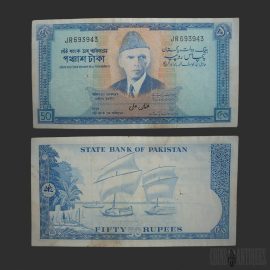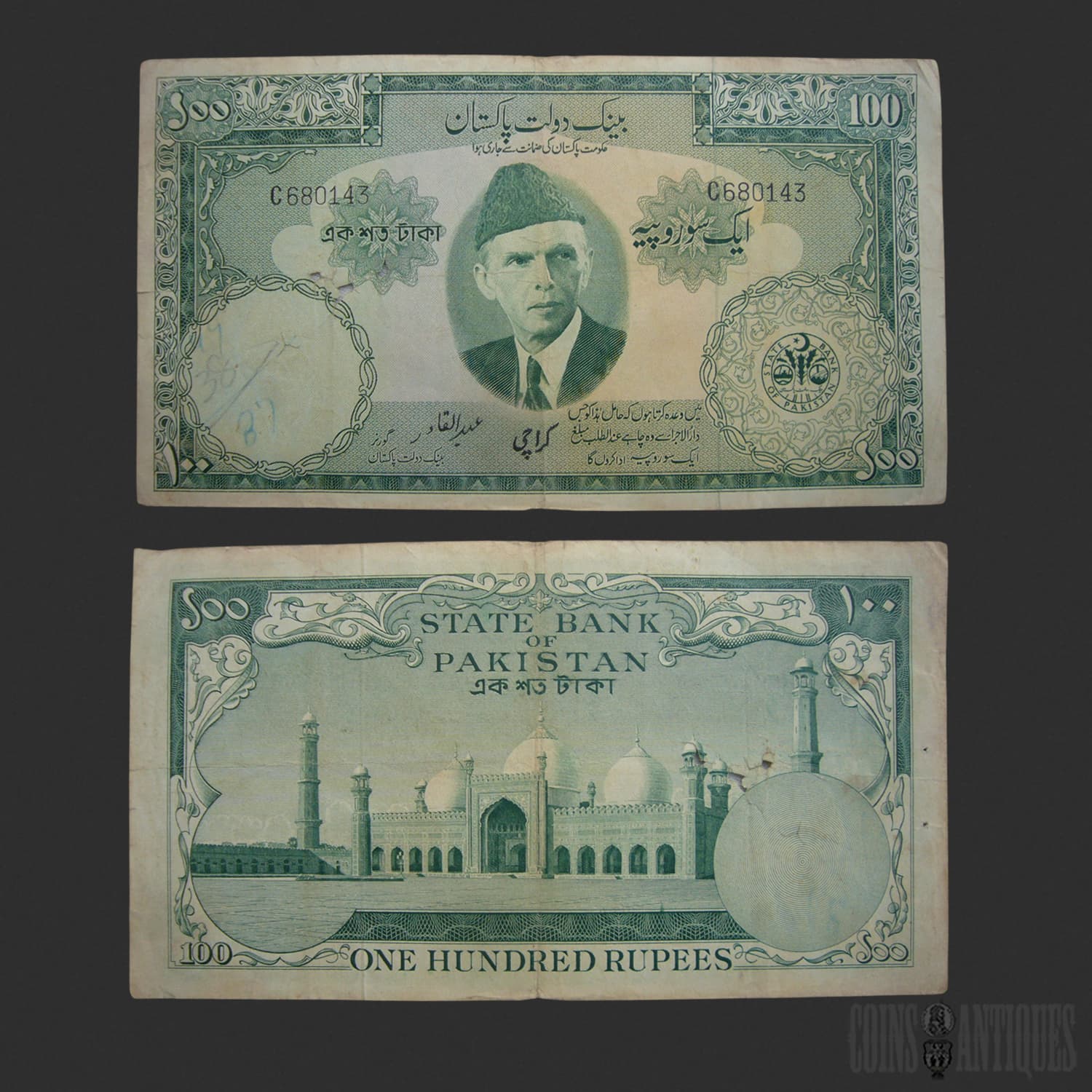
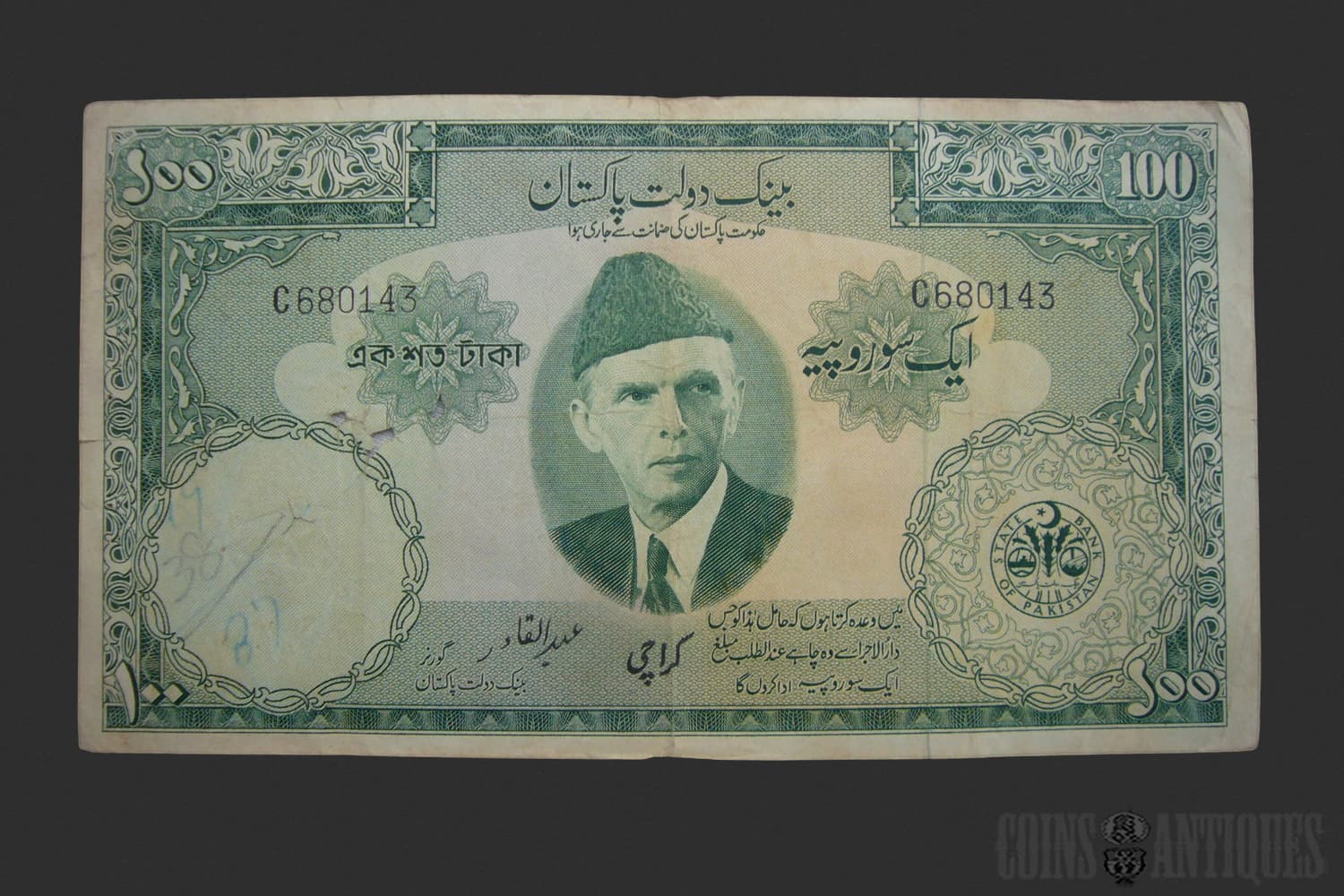
This is a vintage Pakistan 100 Rupees banknote from the Second Generation Series, issued by the State Bank of Pakistan on December 24, 1957
. It is a historically significant piece of Pakistani currency printed before the secession of East Pakistan (now Bangladesh) in 1971.
Obverse (Front):
-
Portrait of Muhammad Ali Jinnah (Quaid-e-Azam, Founder of Pakistan) at center, wearing traditional karakul cap
-
Text in Urdu, Bengali, and English — “بینک دولت پاکستان” (State Bank of Pakistan), “এক শত টাকা” (One Hundred Taka in Bengali), and “ایک سو روپیہ” (One Hundred Rupees in Urdu)
-
Serial number: C680143 (printed on both sides)
-
Signature of the Governor, State Bank of Pakistan
-
Predominantly green color with ornate decorative borders
-
Watermark of Muhammad Ali Jinnah and security thread
Reverse (Back):
-
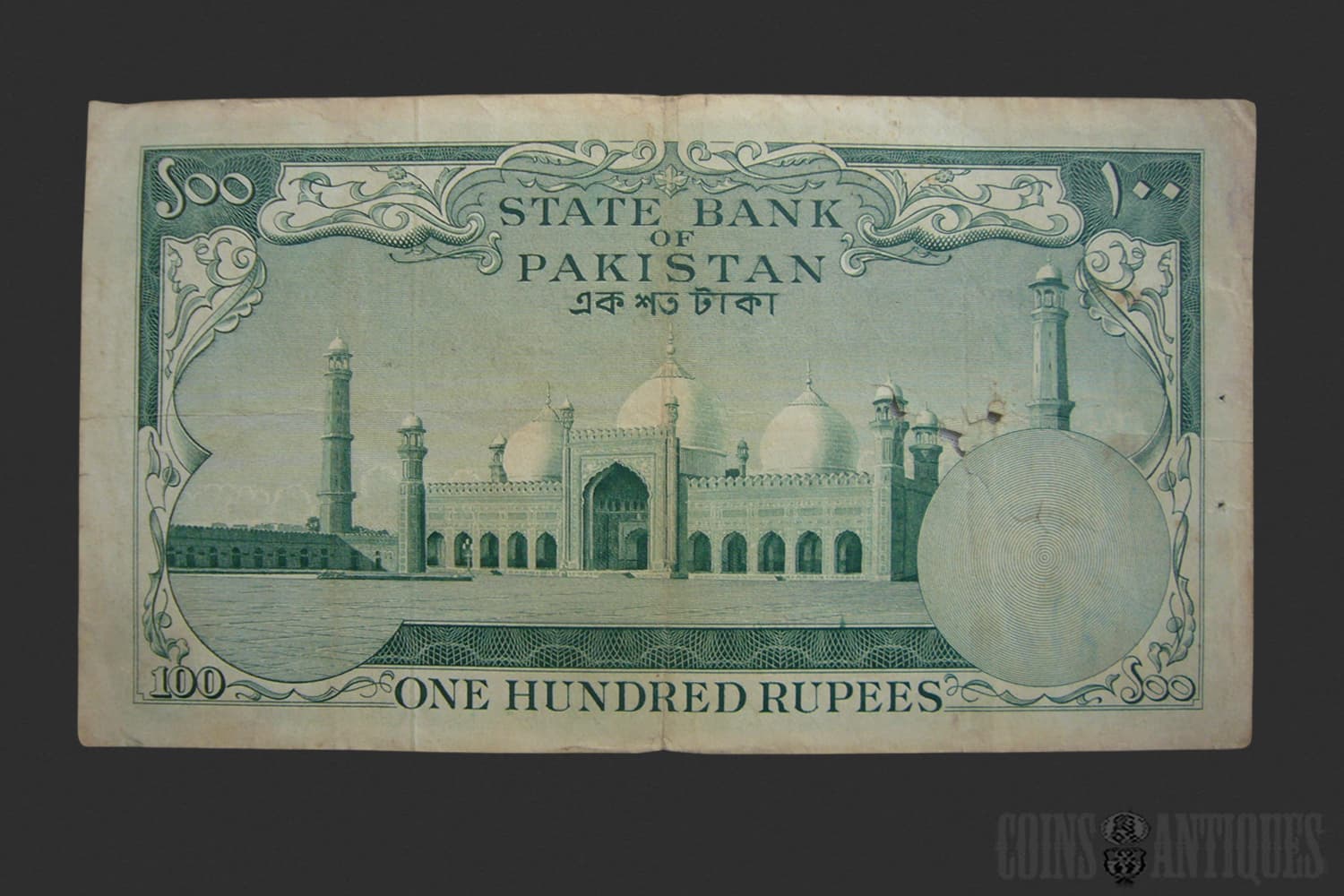
Badshahi Mosque (Royal Mosque) in Lahore — one of the largest Mughal-era mosques and a UNESCO World Heritage candidate
-
“STATE BANK OF PAKISTAN” and “ONE HUNDRED RUPEES” in English
-
Bengali text “এক শত টাকা” (One Hundred Taka)
-
Ornate floral border design
-
Large circular guilloche pattern (typical security feature of the era)
Historical Significance: This note belongs to the pre-1971 era when Pakistan included both West and East Pakistan, which is why it features Bengali text alongside Urdu and English. After Bangladesh’s independence in 1971, all notes carrying Bengali inscriptions were demonetized, making these early issues collectible historical artifacts